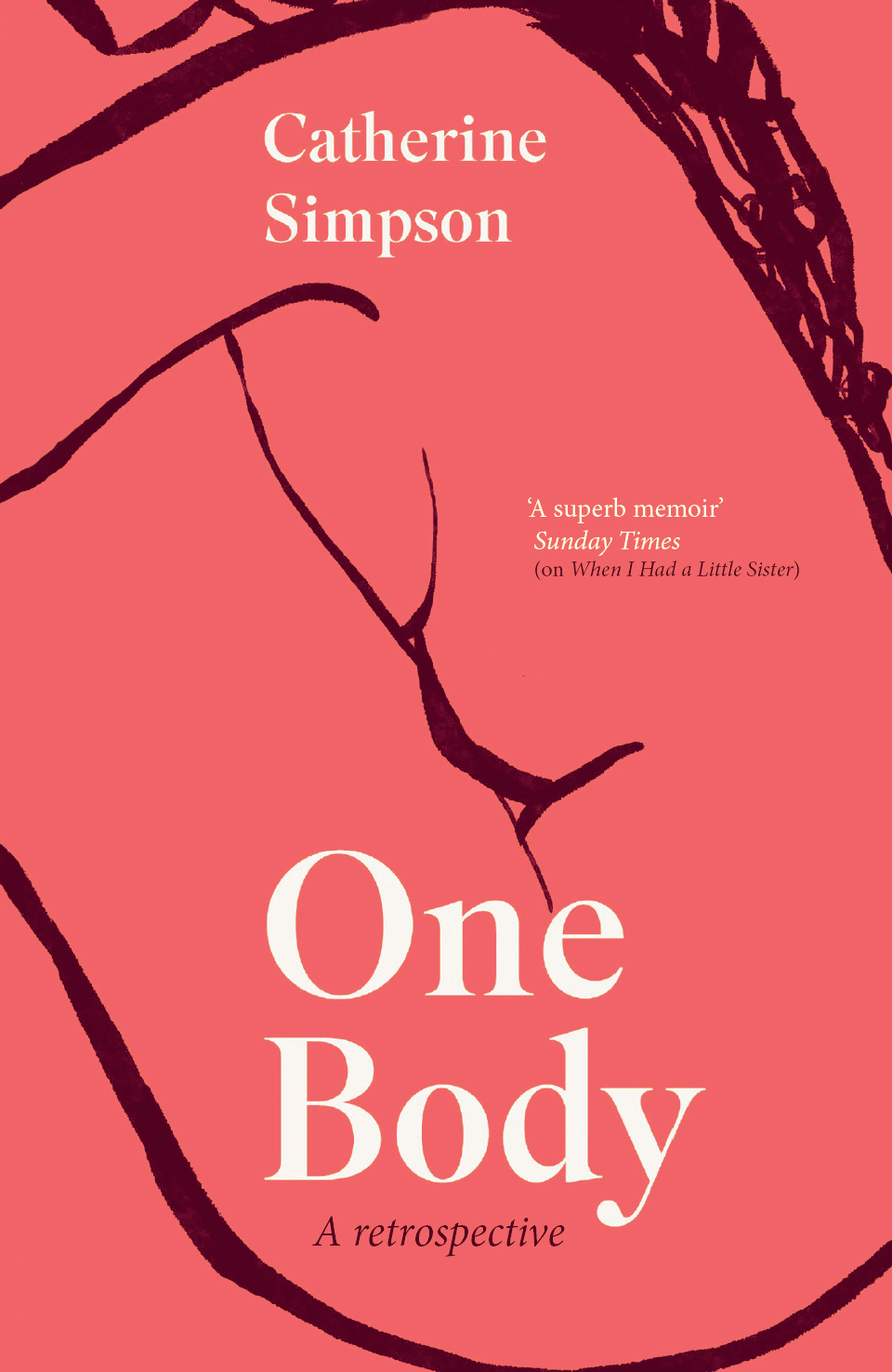
Advent Calendar, Day 15: One Body by Catherine Simpson
December 15, 2021Day 15 of #SantaBooksInt is here! We’re delighted to feature the first chapter from Catherine Simpson’s forthcoming memoir One Body.
One Body
Publisher: Saraband
Publication date: 3 March 2022
ISBN: 9781913393342
Format: Paperback
Extent: 288 pages
In One Body, Catherine Simpson looks back on her life and interrogates how her experiences have shaped her relationship with her body. From being routinely catcalled, objectified and dismissed from a young age, to experiencing severe morning sickness, postnatal depression and early menopause she has lived with all manner of physical and psychological pains that come with womanhood.
Of course, she’s had plenty of successes, joy and laughter, too. She’s had far more freedoms than her mother, but are things improving for her daughters?
In 2018, fifty-something Catherine’s world was upended with a cancer diagnosis. One year later, the disease was in remission – yet Catherine felt changed. She couldn’t simply move on as if nothing had happened. One Body is the candid, searing and often funny memoir of Catherine’s changing attitudes towards her body and how she finally came to appreciate the skin she is in.
About the Author
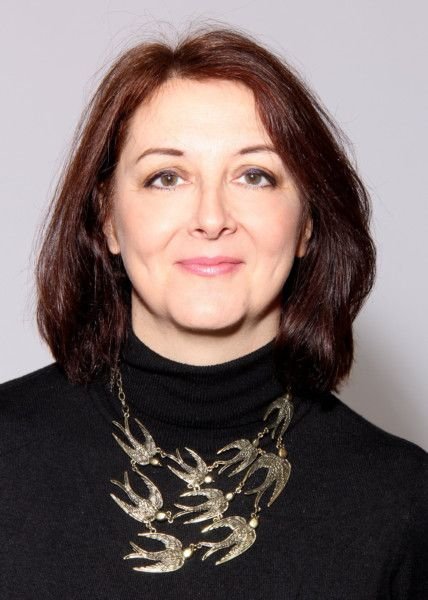
Catherine Simpson is a novelist, journalist, poet and short story writer based in Edinburgh. Her memoir When I Had a Little Sister was published by 4th Estate in February 2019 to great acclaim, and her debut novel Truestory was published in 2015. In 2013 she received a Scottish Book Trust New Writers Award. Her work has been published in various anthologies and magazines, published online and broadcast on BBC Radio. Born on a Lancashire dairy farm, she is now based in Edinburgh.
Extract
You can read the extract below or download it as a PDF.
One
I was born at milking time on a dairy farm, which must have been a nuisance. I would learn later that nothing got in the way of milking and it was never acceptable to be a nuisance.
Nurse Steele attended my mother, who was in bed in the best sitting room; afterwards, the doctor, who had arrived in time for the birth, picked his way across the dark farmyard, through the puddles and over the cobbles, to the cowshed to inform my dad, ‘Another girl!’
It was late October back in sixty-three, and as Frankie Valli might have said, ‘Oh, What a Night’. Being farmers, they must have wanted a boy, but seeing as I weighed a decent eight pounds and had ten fingers and ten toes, they got what they were given.
My mother could not breastfeed and I refused bottled milk (another nuisance on a dairy farm), so legend has it she fed me ‘liquidised sandwiches’.
At three months, before any of my vaccinations, I got whooping cough and she sat up night after night with me in front of the kitchen range, waiting for the ‘whoop’ between the coughs, thinking I had drawn my last breath. Over the years I was told every now and then, ‘You nearly died, you did; think on.’
My mother also told me she had fallen downstairs when she was pregnant with me and remarked more than once, ‘I didn’t make such a good job of you.’
One way or another I used up a lot of my mother’s patience before I was even old enough to remember.
***
I was not raised with permission to be ill – as I grew up, illness was barely tolerated.
Doctors’ surgeries were for inoculations. Hospitals were for dealing with accidents, with the occasional stitch or a plaster cast. For years our farmhouse did not contain a first-aid kit and the only medication we had was a bottle of orange-flavoured Junior Aspirin on the top shelf in the kitchen to shut us up if we felt ‘poorly’ and a tin of sticky pink Germolene for cuts and grazes.
One of my most prized possessions was a ‘nurse’s bag’ I got for my eighth birthday, which contained a pretend syringe and a hammer for ‘knocking knees’. But I knew no one who worked in the medical profession; I was more familiar with the veterinary surgeon. We often watched the vet at work on the farm, injecting animals and calving cows. We also watched the artificial inseminator, the AI, at work in his enormous rubber apron, taking a straw of bull semen and sticking his arm up to his armpit inside a cow. This was mysterious but also normal. So normal that when we played in the muddy banks of the pond, we shoved our hands in deep, brought them out with a ‘plop’ and shouted, ‘I’m the AI!’
At our village primary school, Mrs Darlington had ‘magic cream’, a cream that took away all pain, stopped all aches and cured all illness. I imagine it was Savlon, but for years I believed it said ‘magic cream’ on the tube. I longed for magic cream, but I never got any because I never had any ailments.
When one of the boys broke his leg tripping over a slab in the playground, magic cream was not applied; instead he was put at the front of the classroom with his leg propped up on a chair and a wet paper towel on top until home time.
Children who were ill were exotic. Illness made them worthy of fuss (a chair at the front, a wet paper towel). Illness made them special.
One girl in the village said she saw pink elephants dance around her bedroom walls during a fever, and I was fascinated and envious of what sounded like her own Disney film. When another girl was sent for speech therapy because she said ‘bastick’ instead of ‘basket’, I decided to develop a stutter, until I got home and my mother barked, ‘Talk properly!’
In our dressing-up box, my sisters and I had a pair of Victorian wire-framed spectacles. We took turns sitting on the wall at the front of the farmhouse, the world swimming through the lenses, waiting for the occasional car to pass by in the hope that the driver would think we were intelligent and interesting enough to need glasses. In fact, I was short-sighted and did need glasses, but nobody noticed until I was eight and had a school eye test, by which time I could no longer read the blackboard.
NHS spectacles came in pink, blue or tortoiseshell. I refused the pink because they were too ‘albino rabbit’, and the tortoiseshell ones were for clever boys with short back and sides who did their own experiments, so I ended up with the pale blue.
Glasses were a blow for a child; it would be years before they became stylish. You were a ‘Speccy Four-Eyes’ or a ‘Mr Magoo’ – a cartoon character who blundered around half-blind. My uncle told me, ‘Boys don’t make passes at girls who wear glasses.’ This was the same uncle who said, ‘Pink, pink, makes the boys wink’, which may have been another reason I rejected the pink frames. Glasses, it turned out, did not make me more interesting or intelligent and were definitely not exotic; indeed, there was something sad and lonely about them.
I refused to wear my glasses and ran the bed castors over them several times. They were presumably designed for this eventuality because they bent into the carpet but never broke.
At high school, my two best friends and I got matching silver-framed glasses. On catching sight of us, the deranged biology teacher yelled, ‘What are you doing in my classroom glinting like a row of Nazis?’
No, glasses were not special or exotic and mostly I hid them in my pocket, preferring the world to be fuzzy.
I got contact lenses at sixteen, as soon as the optician would prescribe them. Sometimes I would forget to remove them at night and for a glorious moment on waking I would think my sight had been restored; the trees had leaves! Then, with a sinking heart I would feel the terrible grating and have to drag the lenses off my dried-up eyeballs like peeling Elastoplast off a burn.
I resented wearing glasses because they made my eyes look smaller – having big eyes was something people had remarked on all my life, Ooh, big brown eyes!, as though I had done something right when I chose them.
***
Childhood illnesses were a disappointment. When my little sister Tricia was lying on the sofa red hot and covered in chickenpox from head to toe, I got one spot on my belly.
Baby teeth rotted out of our heads; that was no big deal. Toothache was as normal as, well, toothache. Wobbly baby teeth were got rid of by eating an apple or chewing on a toffee, or if that didn’t work, my grandad would threaten to tie the tooth to an open door and slam it – a suggestion that made me wobble loose teeth secretly until that last bit of stretchy flesh gave way and I tasted blood.
Inexplicably, our 1970s dentist extracted the odd healthy second tooth, leaving permanent yawning gaps. He used laughing gas, which a cousin complained smelled of farts and polos, after which we were sent on our bikes to the Post Office for the cure: an ice cream.
A day off school ill was rare enough to be mythical. I remember my dumb surprise when a friend’s mother said she would not be in school that day because she had ‘a sniffle’. I glimpsed my friend lying in bed surrounded by crumpled tissues and reeking of something called Olbas Oil, and wondered: what strange world is this?
Car sickness was treated with barley sugar, a stomach ache with dry bread, nettle stings with dock leaves, splinters you nibbled out with your teeth. Children did not get headaches. When I came home from primary school and told my mum I had not been able to see the blackboard for flashing lights, she remarked, ‘Oh, you’ve had a migraine, like Uncle John’, and never mentioned it again.
As a child, I found sick people in books alluring because illness apparently made you lovable. Cousin Helen in What Katy Did was sweet-natured, generous, wise and gentle, and lay on the sofa all day with ruffles on her nightie, laughing merrily or smiling beatifically, ‘half an angel already’, like Beth March from Little Women, who was ‘very patient and bore her pain uncomplainingly’. I did not envy Beth her scarlet fever like I envied Jo’s writing, Amy’s ringlets and Meg’s handsome husband, but being on her deathbed certainly made her popular. And then there was Cathy, the consumptive, pale and beautiful girl who faded away with grace to be buried on the moor and send Heathcliff mad with grief in Wuthering Heights.
‘Invalids’, it seemed, were the centre of attention for doing not much more than being fragile and beautiful.
But I was brought up to believe that in real life there was no time or room for Illness and as a middle-aged woman I still dreaded making a fuss and wasting the doctor’s time. In my GP’s surgery was a notice: Do you have skin tags that cause pain? Because if so the necessary minor surgical procedure can be carried out here. When I saw this, I blinked; if I had skin tags that caused pain, I cut them off with nail scissors.