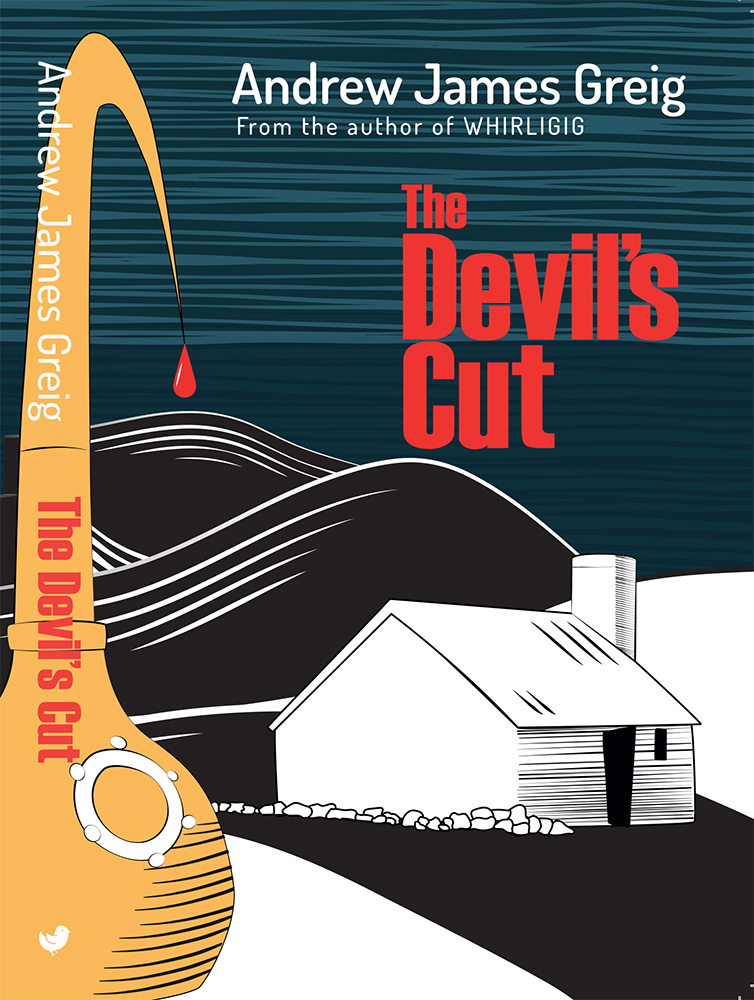
Scottish Crime Writing: The Devil’s Cut by Andrew James Greig
October 18, 2021Following on from the success of Whirligig, The Devil’s Cut by Andrew James Greig is the second novel in the DI James Corstophine series. We’re delighted to feature an extract from the book ahead of its publication on 28 October.
The Devil’s Cut
Publisher: Fledgling Press
Publication date: 28 October 2021
ISBN: 9781912280483
Format: Paperback
Extent: 352 pages
Rights: World
When a distillery owner’s body is discovered on a remote Scottish mountain, forensics confirm that he died of natural causes. DI Corstophine’s concerns are raised, however, when the dead man’s eccentric sister receives a message, apparently from beyond the grave.
The police are dismissive until it appears that the devil itself is intent on attacking other family members. Why is his daughter kept locked and sedated in her room in the baronial mansion? Who or what is stalking his son as he scatters his father’s ashes on lonely summits? And what insanity is behind the horrific attacks in their small Highland town? DI Corstophine and his team don’t know what they’re really facing until it’s too late.
The first novel in the series, Whirligig, featured on our website as part of the Scottish Debut series – you can still read the chapter here.
About the Author
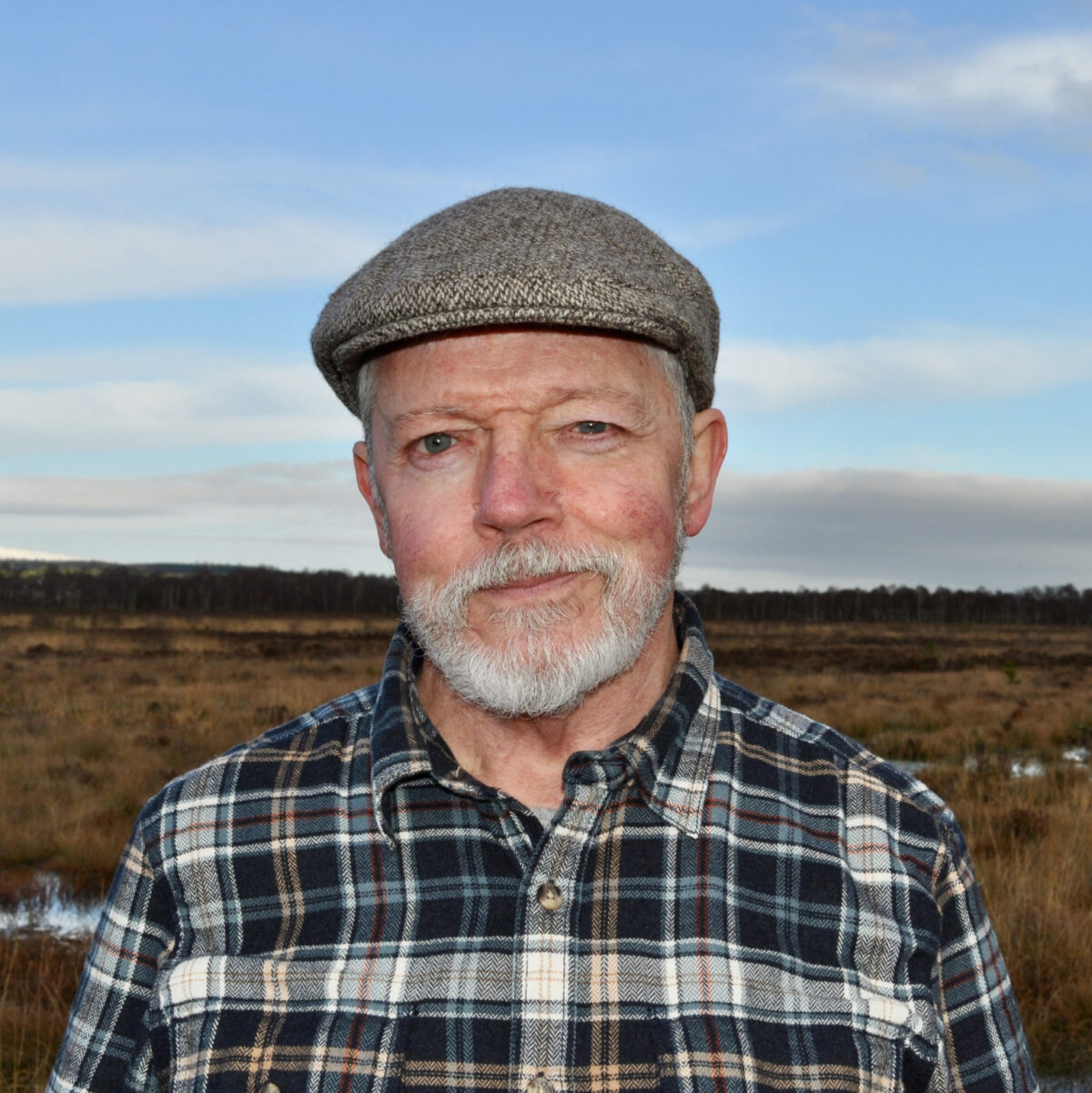
Andrew James Greig lives in Scotland with his family and is inspired by the country he calls home. His debut crime novel, Whirligig, published by Edinburgh based Fledgling Press in 2020, was longlisted for the CWA New Blood Dagger debut award and a Finalist for the Bloody Scotland McIlvanney Prize.
Extract
You can read the extract below or download it as a PDF.
Prologue
He should have turned back when the first wave of nausea washed over him, leaving him grey-faced and shaking until the sickness eventually subsided. Instead, here he was, alone, doubled over and retching on the exposed mountain flank. He’d put it down to food poisoning – a queasy stomach offering the first indication that something wasn’t quite right an hour into his climb. Now, despite the strenuous effort of the final steep ascent, he was shivering with the onset of a sudden fever. Disturbing geometric patterns whirled in the circling mist as if warning of an imminent migraine attack. The summit was just a few more minutes climb, the path still obvious under his feet from the imprint of boots that had trodden and scraped this way before him. Leaning on a damp outcrop that offered little respite from the chill wind, he wiped his mouth clear of spittle before taking another drink from his water bottle.
“Sod it. I’ll just reach the top.”
The words were for himself, encouragement to persevere through the veil of shifting pearlescent vapour as he neared the summit.
Once the water bottle had been replaced in his backpack, he focused on the path ahead. With a look of fierce determination, he pushed away from the rock, continuing the journey upwards, leg muscles protesting with each laboured step. Breaths came in deep gulps, synchronised with the placing of each foot. His heart was hammering an uneven rhythm against his ribcage in protest, almost as if desperate to leave the confines of its bone prison. He decided to ignore it – that and the way his eyes insisted on adding curlicues around the periphery of his vision. The sun had long been hidden by the lowering cloud, coalescing into miniature wet jewels on his beard and adding to the cold sweat already beading his forehead. The wind gained in strength as the summit neared, whipping at exposed flesh. At the beginning of his ascent, a gentle breeze had provided welcome relief to his exertions. Here, nearer the summit, the breeze had strengthened into more of a gale and now clawed at exposed raw skin with icy barbs.
The weather never stood still on the mountains, changing so quickly that he knew better than to take off his waterproof – even when the sun attempted to bake him alive. God knows this wasn’t the time to take sick, alone on a mountain range at the onset of a Scottish autumn. He berated himself for not keeping in shape. Lugging those extra kilos of body fat up the hills had seemed like a good idea at the start – a well-defined trail easing upwards through the promise of finer weather than could reasonably be expected in late September. An Indian summer it was called. There was a reason it was called that; he once knew why. Now no amount of mental effort called forth the answer. It didn’t matter. He just had to reach the top and then he could turn back. An easy path once he cleared the false summit, here at the mountain’s upper reaches. The sun was probably still shining further down, away from the clouds that stubbornly hugged the mountain peak. Just a little higher, a few more minutes.
He may as well have been alone in the universe, wrapped in a cold blanket of moisture that conspired at times to obscure visibility to just a few metres. He wondered again at the wisdom of climbing on his own – the swirling mist adding to the feeling of disorientation that followed the sudden onset of his sickness. There were dangerous cliffs here, wander too far off the track and he could easily fall to his death. Foot followed foot, breath followed breath, heartbeat followed heartbeat – until the heartbeat stopped.
He doubled over in agony, clutching at his chest as a giant fist squeezed his heart. His feet staggered randomly off the track as he fought to stay upright, the intensity of pain white hot inside his ribcage.
“Must be a stitch.”
The words were forced out from between clenched teeth, giving voice to a comforting lie. He fumbled desperately behind his back to reach the small pack slung over his shoulders, liberating a plastic water bottle, which he upended to drink in urgent gulps. His other hand massaged his chest, trying in vain to unknot the muscle that held him in a relentless grip. At some level of consciousness, he was aware that he was having a heart attack; that he had fallen awkwardly onto the boulders underfoot; that he was dying. Not here. Not now. Not alone. His mind screamed a silent final eulogy through the pain.
Clouds gathered around him – spectral mourners reaching out to hold him in their damp embrace, depositing cold tears on his cheeks as the heat left his body with unseemly haste. The bottle slipped from his weakening grip. Caught by the wind, it bounced from rock to rock before becoming airborne on a powerful gust. It finally lodged in between two boulders; the neck jammed almost horizontally, facing away from the prevailing wind. There was still a mouthful of water left in the bottle, and as the wind veered around the rocks, an errant draft played over the neck – creating an aeolian dirge, which he heard long after his eyesight had faded.
***
Chapter One
Wake
“It’s how he would have wanted to go.”
They sat around a pub table – the one nearest the comforting warmth of an open fire, some distance away from the noise at the bar. The assorted mourners nodded sagely as if hearing some wisdom hidden in such an anodyne statement, pints held close to their chests as they considered the import of the words. Jack McCoach, the focus of their attention, remained silent. For him to have been otherwise would have been noteworthy, reduced as he was to 2.7 kg of ashes. He took pride of place, residing in a brushed pewter urn, which occupied the centrepiece of their table. It had been a week since the funeral service. Black clad as crows, they had formed a small part of the congregation, heads bowed respectfully. Singing half-remembered hymns in praise of a deity few there really believed in anymore. The minister had made a reasonable fist of it – praising the family’s charitable donations; dropping a few amusing anecdotes into the mix that were tame enough for church.
His wife and son both chose readings from the Old Testament, that rich source of pickings for all occasions. Jack McCoach’s wife, Emma, had read the bit about time for dying. What was it? To everything turn, turn, turn. There is a season turn, turn, turn. Corstophine stopped the tune running in his head, aware that he didn’t have it quite right but that was the gist. He studied his companions, already well advanced in inebriation. Bryan Cobb, the managing director of the firm; Sandy McPhearson, the corpulent finance director, and then Robb McCoach – Jack’s son and supposed heir. What was the reading Robb had chosen, stood up there in the pulpit with a voice more befitting a southern preacher? The Lord is my shepherd, I shall not want. He makes me down to lie. Through pastures green He leadeth me– something to do with making the bugger’s eyes water? No, that’s Pink Floyd. Corstophine shook his head in an attempt to bring clarity to his thoughts. He’d had enough.
“Sorry lads, that’s me.” He held his hands up at the protestations, offers of one for the road, a nightcap. “You’ll have to decide what to do with his ashes without me.”
“You’re a lightweight, Jimmy, gie the man a proper send off!” Sandy’s eyes had trouble focusing as he swayed in his seat. Corstophine was put in mind of a bloated cobra wearing a blond wig. Why was he even here with these people? He’d joined the hillwalking club last year, another attempt at finding a life outside of work, an escape from the daily diet of petty crimes that all needed solving. Trouble was these hillwalkers did more drinking than walking.
“Aye, well.” Corstophine nodded to the table, encompassing the pewter urn and its dry contents. “That’s me!” He placed his glass awkwardly on the table, the hard retort as it impacted punctuating his closing comment.
They watched him as he left, hand held loosely erect as he bid farewell to the landlord. The whole pub let loose a stored breath as the door closed behind him, conversation levels rising as if freed from an unwitting constraint.
Corstophine stood outside in the cold night air, hunkering down into his jacket as he set his feet towards home. The streets of the small highland town were quiet at this hour – too late for the rowdy youths who had earlier congregated at the entrance to the kids’ playpark where they shared bottles of Buckfast, cigarettes and stolen kisses. Too early for the habitual drinkers who would soon be weaving random paths back to a lonelier existence once the landlord eased them out the door. He felt an affinity with the streets, a comfort in treading worn paving stones like he had when he was a bobby. How long ago? Corstophine struggled with simple mental subtraction, the numbers refusing to play ball as they bounced from one slurred brain cell to the next. He admitted defeat. Call it twenty-five years, more or less. Twenty-five years since he was as new as his uniform, as polished as his boots. The town had grown in that time; new hotels springing up to cater to a burgeoning tourist trade, eager to sample the rugged mountains surrounding them. They’d brought their own problems: drunken fights as expense accounts encouraged the businesspeople on team-building exercises to excess; stag and hen nights ending in acrimony; walkers, mountaineers and skiers lost on the hills.
It was almost three weeks since he had received a call from the mountain rescue team about a man’s body found near the summit of Sgurr Thuilm. There was nothing remarkable about this; the mountain rescue headquarters kept in regular communication about rescues or body recoveries. He’d been talking to the team leader, Dr John Hesketh, during a Zoom conference call earlier that summer. What had it been about? Out of his fuzzy mind emerged a clear picture of the agenda – Emergency Response – Unified Agency Guidelines. All he could remember from the event was Dr Hesketh complaining that lost or injured people were given priority in terms of multi-agency support. Helicopters, Fire, Police, Ambulance, all made readily available in the event of an injury. But if the team found anyone dead on the hills, nobody was interested. As a result, the unpaid volunteers of the mountain rescue team often had the difficult and dangerous job of taking a body off the hill unaided.
He’d seen that for himself that night, standing at the side of a cold, dark Highland track as part of a solemn stationary convoy waiting for the mountain rescue team to appear. They had materialised out of a wild night, head torches bobbing in the air like fireflies, until the orange of their survival clothing caught in the spinning ambulance lights. It had taken six of them to carry the body, taking turns, two about, to clamber down the trail with Jack’s heavy weight lashed onto an aluminium stretcher. The team were exhausted, evident in the way they slipped and scrambled down the track towards him. It didn’t need the doctor to confirm the guy was dead – swollen tongue hanging out of colourless lips. He looked more like something that should be hanging on an abattoir hook than a human being. Corstophine recognised him straight away, as had the rest of them. Jack McCoach was a larger than life character in every regard, owner of the largest distillery and one of the town’s major employers. His wife had been on the phone since three that afternoon, convinced that something had happened to him – insisting they send the mountain rescue out. He’d had to tell her not to worry, Jack was probably on his way home, but she’d sounded hysterical. She’d let it slip that she had an app on her phone that told her where he was, and he hadn’t moved from the mountain summit for the last two hours and wasn’t answering her calls. He’d sent PC Lamb out to check, and Jack’s car was still parked at the foot of the mountain. Then they’d received a call from the mountain rescue. A group of climbers out to bag a double Munro had seen his body just a few metres off the main path when the mist had momentarily lifted. Not that Dr Hesketh leading the recovery team could have helped him – he’d informed Corstophine that Jack must have had a massive coronary and would have died within seconds.
The body was sent to the coroner anyway, just to keep the paperwork tidy. There, Jack had suffered the final indignity of having his chest sawn open and heart removed, so it could be prodded and poked on a laboratory bench before being sliced into sections. The report had come back as death from natural causes, with weight and heavy alcohol consumption being contributory factors. Corstophine realised the coroner must have removed his liver as well. Exactly how much of him was left in that urn?
A church bell let him know it was 11:00 pm, the sound apologetic and muffled, following the addition of leather pads to the clapper in June. Corstophine glanced up at the clock tower, the hands confirming the bells’ announcement. He had some sympathy with the locals who’d been haranguing the council environmental health for years. The bells were never that sonorous, more discordant than tuneful, as if the foundry had offloaded failed bronze casts to those churches with less money. It was far worse when the bell-ringers practiced – or on a Sunday morning when the bell tower broadcast a tuneless cacophony for miles around. How young children managed to sleep through the noise was a mystery.
The thought of children brought his eyes back to a contemplation of the ground. His own children that never happened; a wife that died too young. The case last year that had almost cost him his career. Sometimes being a detective inspector was a cursed job, cleaning up the filth and social detritus that humans leave in their wake.
“You need your bed, James. You know drink always makes you maudlin.”
He smiled at the woman whose appearances at his side became less frequent every year. Her face in its frame of brown curls, looking at him with concern. A face he never stopped loving. A solitary tear appeared unbidden from his eye, and he blinked it away. When he opened his eyes again, she had gone.
“Aye, well. You’re right.” He spoke the words under his breath, too quiet for anyone to hear even if there had been anyone else on the street. Some words are for the dead, or for comfort when you’ve nobody else to say them for you. Corstophine fumbled in his pocket for his house keys, turning off into the quiet side street where he lived. Key in the door, he entered a house that was too large, too quiet, and held too many memories.