Translator Q&A: Matthew Hyde
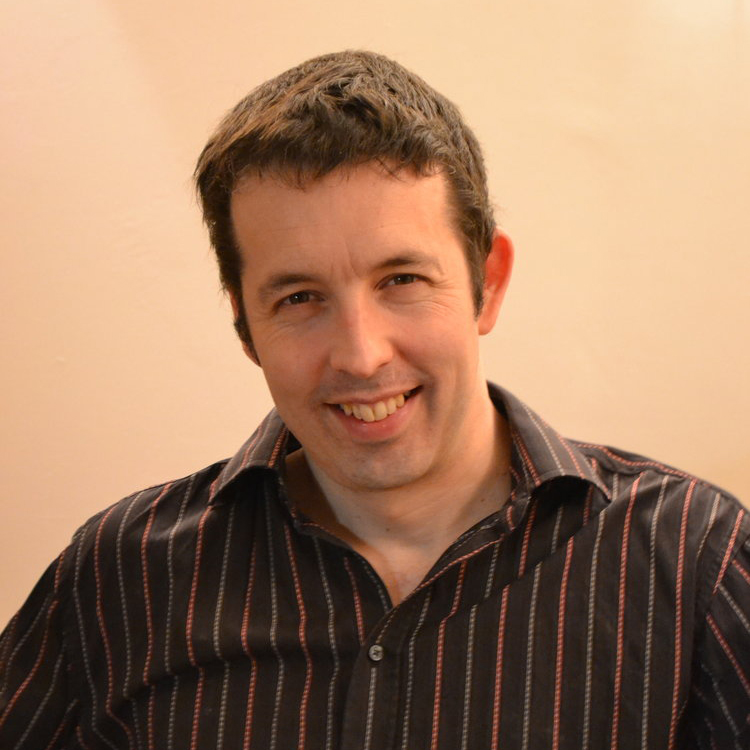
March 22, 2021Our next featured translator, Matthew Hyde, works with both Russian and Estonian, and was a British diplomat in London, Moscow and Tallinn before becoming a translator. In this piece, he discusses his linguistic background and approach to translation, and considers how translated works can become a way to distribute voices that would otherwise go unheard.
Matthew Hyde is a literary translator from Russian and Estonian to English. He studied Russian at the School of Slavonic and East European Studies, London University, and gained a postgraduate Diploma in Translation from the Institute of Linguists. His translations have been published by Pushkin Press, Dalkey Archive Press, Vagabond Voices, Words Without Borders, and Asymptote. Prior to becoming a translator he worked as a British diplomat, with postings in London, Moscow, and Tallinn.
Some of Matthew’s work has been published by Vagabond Voices, a Glasgow-based company known for its diverse literary list of translated titles. You can find the full catalogue and read more about Matthew Hyde on the Vagabond Voices website.
How did you start your career as a translator?
You could say I started young, at around the age of 5. My parents took me to live in Communist Poland in the 1970s, and I picked up the language quickly, so I was soon interpreting for them. I forgot Polish completely once we were back in England, but I studied Russian at university and my first ‘proper’ translation job was at a secretive government organisation known locally as ‘the doughnut’. There was nothing literary about the texts I translated, but they could be described as fantastical.
What does your translation process look like?
I open the book and start translating. Some people say you should read the whole thing before starting, but for me that lessens the pleasure of discovering the book as I work. Translation is a form of ‘deep reading’, probably the deepest there is, which means that I try to get inside the author’s mind, understand exactly what he or she was trying to achieve, and then formulate that in English, rather than translating ‘word for word’, which rarely works well. This means that the first draft already sounds like English and doesn’t retain too much foreign syntax. Then I edit my work three or four times to try and achieve the illusion that the book could have been written in English to start with.
Could you tell us about one or two (or more!) translation projects that you are especially proud of having worked on?
I once translated a short story called ‘Bad Town’ by a Russian writer, Liza Alexandrova-Zorina, who is also a journalist for the independent newspaper ‘Novaya Gazeta’, which is a brave thing to be in Putin’s Russia. If the role of the translator is to give a voice to those who would otherwise be unheard, then one of the most worthwhile things we can do is to help those who are oppressed in their own countries for political reasons. I hope to do more of that kind of work. I am also proud to be translating part of AH Tammsaare’s ‘Truth and Justice’, which is one of Estonia’s most important works of literature, and a good read.
What advice would you give to aspiring translators?
Read lots in English. Thanks to the British education system, there is a tendency for the translator to be primarily a linguist, and to be less skilled at writing in their native language. This comes with practice, but it’s important to expose yourself to the full creative possibilities of English. As any writer will tell you, rhythm is important, and you pick that up from reading. It’s also worth learning a ‘small’ language like Estonian because there is severe competition amongst translators working from the larger languages into English.