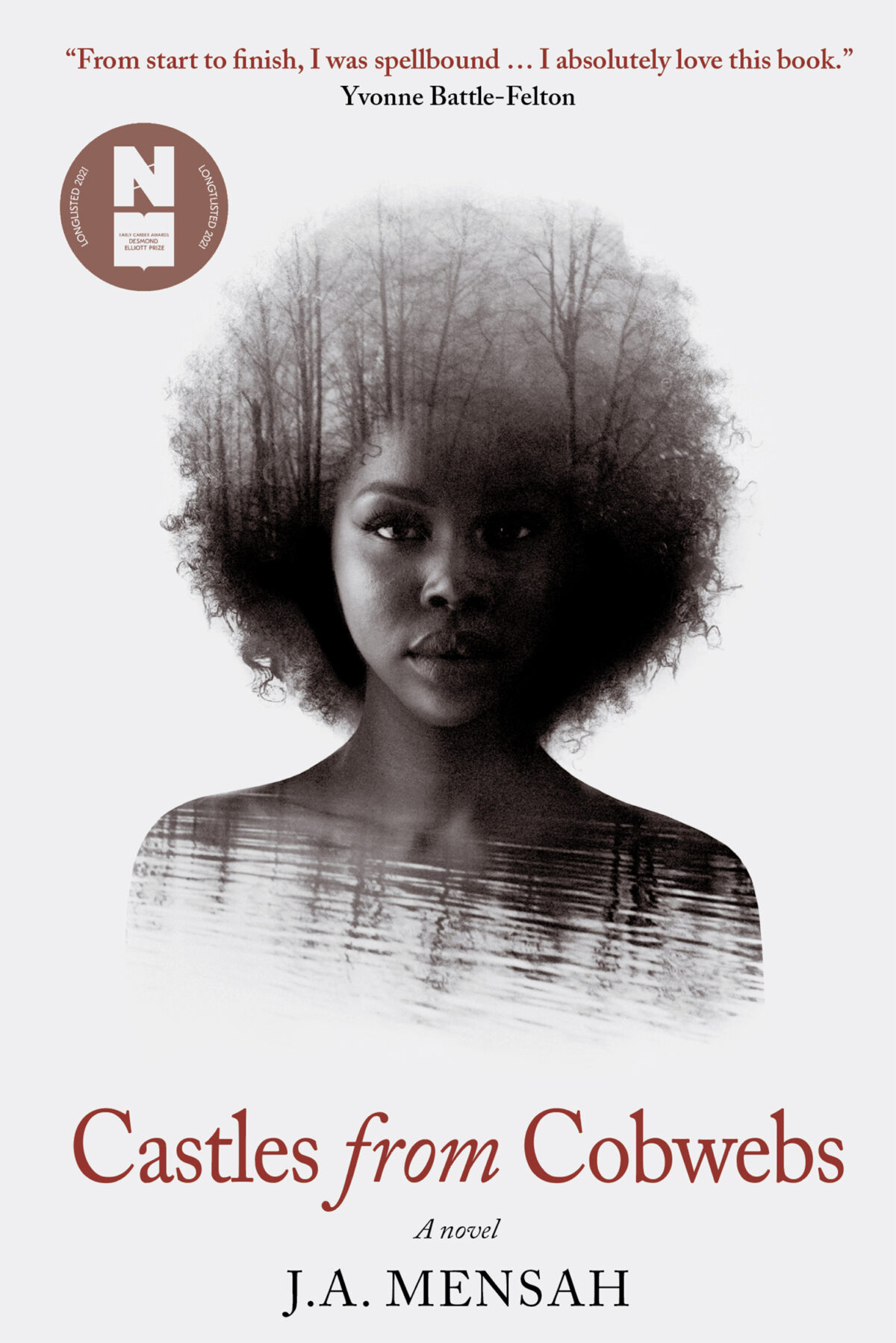
Scottish Debuts: Castles from Cobwebs by J. A. Mensah
April 23, 2021We’re delighted to feature an exclusive extract from J.A. Mensah’s debut novel, Castles from Cobwebs. Published by Saraband in February 2021, Castles from Cobwebs is already achieving critical acclaim: it won the inaugural NorthBound Book Award and is longlisted for the Desmond Elliot Prize 2021.
Castles from Cobwebs
Publisher: Saraband
Publication date: 18 February 2021
ISBN: 9781912235766
Format: Hardback
Length: 288 pages
Rights: US and translation rights available; audio rights sold to WF Howes
‘Lyrical and magical … a powerful and very readable novel.’ – Louise Maskill
I’d always known that I was Brown. Black was different though; it came announced. Black came with expectations, of rhythm and other things that might trip me up.
Imani is a foundling. Rescued as a baby and raised by nuns on a remote Northumbrian island, she grows up with an ever increasing feeling of displacement. Full of questions, Imani turns to her shadow, Amarie, and her friend, Harold. When Harold can’t find the answers, she puts it down to what the nuns call her ‘greater purpose.’
At nineteen, Imani answers a phone call that will change her life: she is called to Accra after the sudden death of her biological mother.
Past, present, faith and reality are spun together in this enthralling debut. Following her transition from innocence to understanding, Imani’s experience illuminates the stories we all tell to make ourselves whole.
About the Author
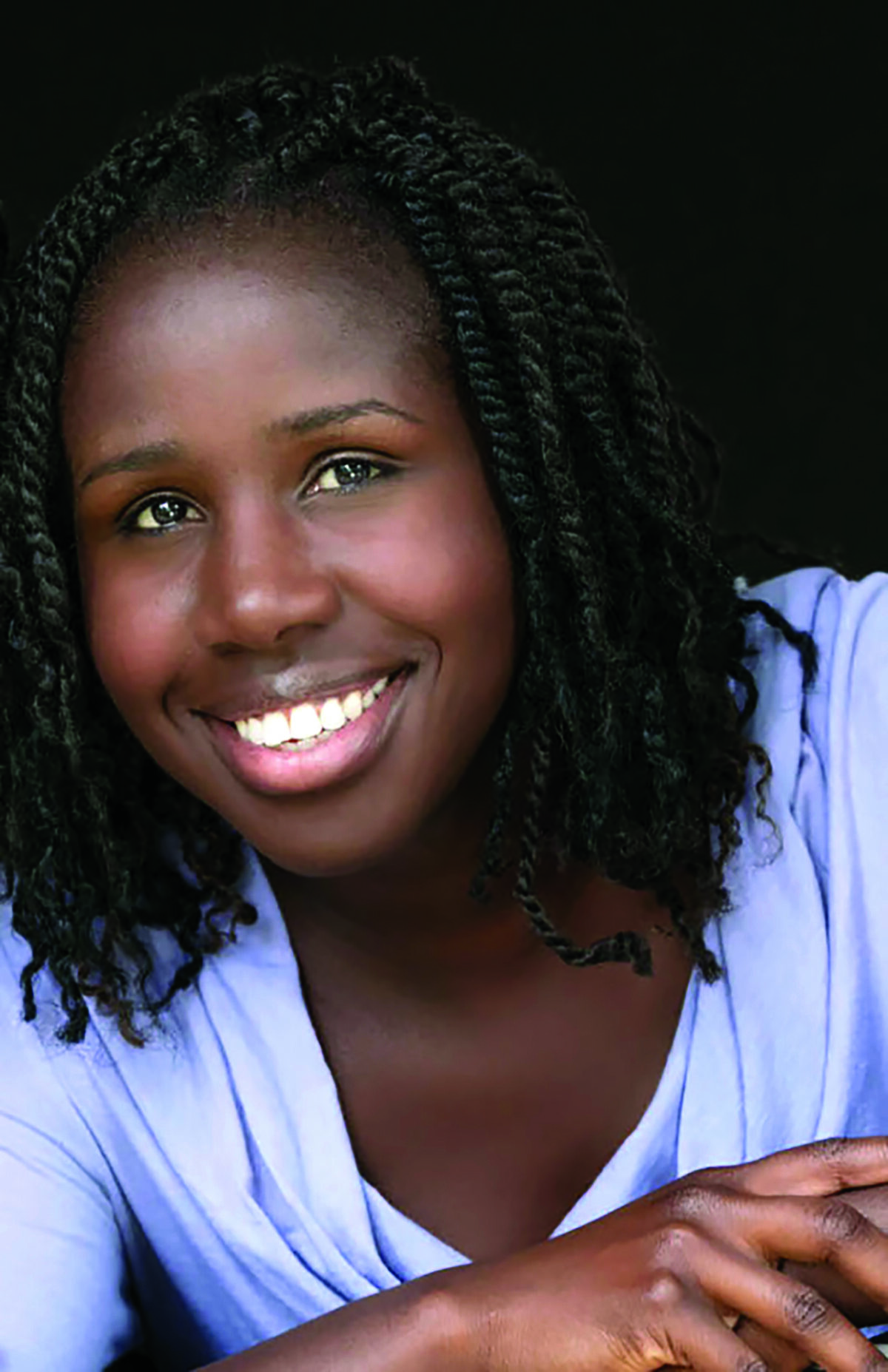
J.A. Mensah is a writer of prose and theatre and teaches at the University of York. Her plays have focused on human rights narratives and the testimonies of survivors. Her short stories appear in collections published by Comma Press (The Book of Newcastle) and the forthcoming Northern Anthology by Dead Ink (Test Signal), among others. Castles from Cobwebs, her first novel, won the inaugural NorthBound Book Award. You can read J.A. Mensah’s interview with New Writing North here.
Extract
You can read the book extract below or download it as a PDF.
Brown
Chickens cluck and gossip nearby. A car honks in the distance. Someone, somewhere, shouts a greeting. Wheels screech, several of them, successively. I wait for the crash: it doesn’t come. Voices rise in confused, or angry, chorus. A group of children chant a playground anthem. They clap and stamp in sync. I can’t make out the words. The soft lap of a skipping rope beats the ground repeatedly. Something hits the window. A ball? I don’t move to see. Soupy air rests on my skin and the sun through the blinds crosses my cheek with a lick of dry heat that is surprisingly refreshing; the crisp light soothes against the cloying humidity. I open my eyes and close them. Open, then close. The ball hits the window again. Close eyes. Open. Close. I do that thing where your eyes are open behind closed lids. I watch the light filter through the skin that shields my gaze; the back of my eyelids glow ochre – Brown. I’m Brown again.
I’d always known that I was Brown. I don’t remember it being a discovery: putting my arm against Sister Alma and noticing the difference between us; paddling on the beach with Reverend Mother and realising the contrast in our reflections as they rippled in the stream. There was no one moment when I suddenly knew. Amarie was a blackish-grey and Mother was whiteish-pink. Amarie was spirit and Mother was flesh. I was Brown, somewhere between them, more flesh than Amarie and more spirit than Mother. They were my coordinates and I knew where I was rooted between them. Black was different, though; it came announced. It was the year the parish roof couldn’t be repaired any more. There had been so many patch jobs done, it was like an old quilt, all threadbare and no good at blocking water. That autumn we had a ceilidh to raise money for a new roof and Mrs O’Shea from the village, Penelope-Marie’s mum, she told Sister Alma that I was a good dancer because all black people have rhythm. And there it was: suddenly I was Black. After that, there was a world outside with others who were Black like me and this hunger formed. Perhaps it had always been there, as a cloud maybe, but it hardened, became granite in the pit of me. Every time Harold found another morsel about Black from Yahoo, I savoured it. But Black also made me dizzy, like when you’re little and you spin around, then in the middle of the spinning you realise you can’t stop and stand still, and you’ll fall over if you try. Black came with expectations, of rhythm and other things that might trip me up.
At Heathrow Airport, there were people of all colours and combinations. I saw a woman, Brown like me, with hair the colour of a postbox. A boy, paler than Sister Alma, with black hair down to his knees, silver chains hanging from his wrists, and blue and purple around his eyes. I watched them – ravenously. I wished Amarie was there to see it all. I prayed she’d stop being so stubborn and appear. At Kotoka Airport, the faces were all kinds of Brown: chestnut, mahogany, oak, chocolate, terracotta, hazel, copper, gold, umber, rosewood, ebony, coffee, onyx, dusk.
‘I knew it was you,’ Aunt Grace says, pulling me from the multitude flooding out of the airport. ‘You have your mother’s face exactly.’
Aunt Grace is a small, plump woman. She smells of cocoa and musk and her cheeks shine in the glow of the streetlights that brighten the exit of the airport. I am tall and sharp next to the roundness and softness of her. She takes my arm and strokes the back of my hand, looking up at me. I notice that the skin on my hands has chalky lines again. It was because of these lines that I told the girls at the day school that God had carved me from rocks on the Farne Islands.
‘Are the dry, white bits the places God didn’t manage to wash all the bird shit off?’ Shannon had asked, and the other girls all laughed. I don’t know if they actually found it funny or if they laughed because, if you go ahead and laugh loud enough, it means you’re not the one being laughed at right now. Standing beside Aunt Grace, I wonder if I’ll learn to make my skin shimmer in the light like polished marble the way hers is doing now.
‘Yes, you have her face exactly,’ Aunt Grace says, then pauses, ‘only she was a little bit fairer.’
She notices my rucksack and takes it off my back and hands it to a young man. I wonder if he’s a relation and as though she’s heard my thoughts, she says, ‘This is Boateng, we call him Boat. He’s nearly family but not quite.’ She touches his arm affectionately. ‘He speaks Twi and Ga fluently, but his English is not the best.’ She says this chuckling as though she’s made a joke. ‘He’s been with us since he was a small boy, as a house-boy, and now as our driver.’ She leans in towards me like she’s about to share a secret, ‘We paid for his lessons and he passed the test, no bribes involved.’ She says this with pride.
Boat has old eyes in a young face. He has a sprinkling of hair over his top lip and he’s gangly – he moves as though he’s been given more body than he’s used to and is only just beginning to master all of the parts. I guess he can’t be much older than me. I say hello and he smiles and nods but doesn’t speak. He grips my oversized rucksack awkwardly, not quite sure which part to hold. Then he steps into the flow of people, confidently parting the stream of bodies to create a path for us to walk through. Away from the crowds and onto the car park, we zigzag through stationary cars. We reach one with a man leaning on it and stop. I wait to be introduced. Boat reaches into his pocket and hands the man a bundle of paper money.
‘He was just minding the vehicle,’ Aunt Grace explains as the man thanks us and walks away. What he was minding the car for, I have no idea, and it strikes me as odd that no other car has anyone ‘minding’ it.
We inch through traffic and the speckled lights of Accra at night flicker beyond the window. Beside me in the back seat, Aunt Grace clasps my hand with both of hers. ‘This is really very bittersweet for us. We’ve lost our sister and gained a daughter.’
The air conditioning hums and spurts like a smoker with a raspy cough. Aunt Grace continues, ‘We don’t know how to feel, really. You must give us time and be very patient. At times we may laugh and others we’ll cry or argue…’ She looks lost for a moment. ‘This will be hard for you as well. We have to remember our patience with you, too.’ She takes my face in her hands and pulls me into her chest for a hug that I’m not expecting, I’m surprised and resist initially, before giving in to it.
‘Several people want to meet you. I have been quite strict, though. Not too many, not all at once. First, you relax and see Ghana. You will see Ghana,’ she says with emphasis. ‘We will go to the village for the funeral, and you will attend. It is why you are here after all. After this, there can be meetings and such. But first you see the place and then you do what you came here to do. My girls will take care of you. They’re your sisters, you must think of them like this. I know you say cousin in the UK, but here we say sister. They’ll take you to see all of the things, the parks, the castles, beaches, anything you want. Then the funeral and other such things… But first things first.’
A ball smacks against the windowpane. The skipping rope slaps and the chickens cluck. Sunlight filters through the blinds and my closed eyes. Black fades to brown, and my eyelids glow ochre again. I emerge from the haze of half-sleep and memory. Open. Close. Open.
The room is large and busy. There are two wardrobes, each stacked with multiple suitcases on top. There is a double chest of drawers in dark wood and a towering Victorian dresser with a hefty oval-shaped mirror. As well as the double bed that I’m in, there’s another bed on the adjacent wall. Three brightly coloured rattan stools huddle in the corner between the wardrobes. On the wall opposite the window hang individual pictures of members of the family. Each one has its own bright frame: gilt, bronze, silver, metallic red and so on. At the centre of this gallery is a large group photo, framed in wood. Who would I have been if my picture was on this wall? I stare at each face, questioning. I try to see if I can recognise her: my mother. Two faces stand out; each has something that feels familiar.
A rug with a picture of a lion on it stretches across the floor; grassy plains spread out behind him and the sun sets on the horizon. Above the chest of drawers is an embroidery of the Last Supper. The room brims with furniture, fabrics and textures – unlike anything I’ve known. The sun creeps through the blinds, bouncing off the walls and surfaces, drawing my attention here, then there. Now to the mahogany Thinking Man ornament, next to the ivory lamp stand with the bird engraved on it, then it highlights a corner, some colour, a detail that could easily be missed when trying to take in the whole. My eyes spring and scurry across the room, poring over one item, searching through the rest, letting the sun guide me, then looking at those things that hide from the light – like the jewellery box that sits in the shade at the corner of the dresser. I get up to stroke the stools in the shadow of the wardrobes; look under the beds; behind the dresser, exploring the shade and dark places. Then, I’m blinking back tears, trying to swallow the lump that’s forming in my throat. I’m looking for her, that’s what I’m doing, in the places the light doesn’t touch. I’m searching for Amarie. I crawl back to bed, pull the covers over my head and let the lump in my throat burst into the pillow.